
The ACL is one of the primary stabilising ligaments of the knee, and tears commonly occur during sports or activities involving sudden changes in direction, pivoting, or landing. ACL reconstruction involves replacing the torn ligament with a tissue graft, selected based on the patient’s age, activity level, and clinical profile, to restore knee stability and function, with recovery guided by functional milestones rather than time alone.
Knee Specialist in Singapore

Dr Wang Lushun
Senior Consultant Orthopaedic Surgeon
MBBS (Singapore)
MRCS (Edin)
MMed (Ortho)
FRCS (Ortho) (Edin)
Dr Wang Lushun is a Senior Consultant Orthopaedic Surgeon with over 18 years of clinical experience in the assessment and surgical management of knee and hip conditions. He is registered with the Singapore Medical Council and practises at a licensed private medical institution in Singapore. His clinical practice is grounded in evidence-based diagnosis and individualised surgical planning, with a subspecialty focus on joint replacement and reconstruction.
If you are experiencing persistent knee pain, joint instability, or reduced mobility, a clinical assessment with an orthopaedic specialist can help establish an accurate diagnosis and identify the most appropriate treatment pathway, whether conservative or surgical.
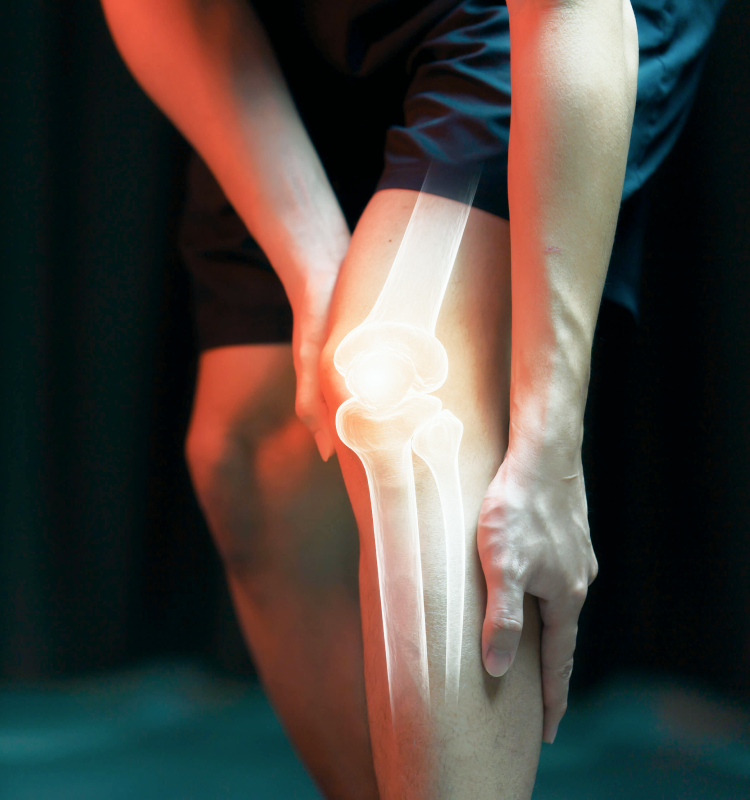
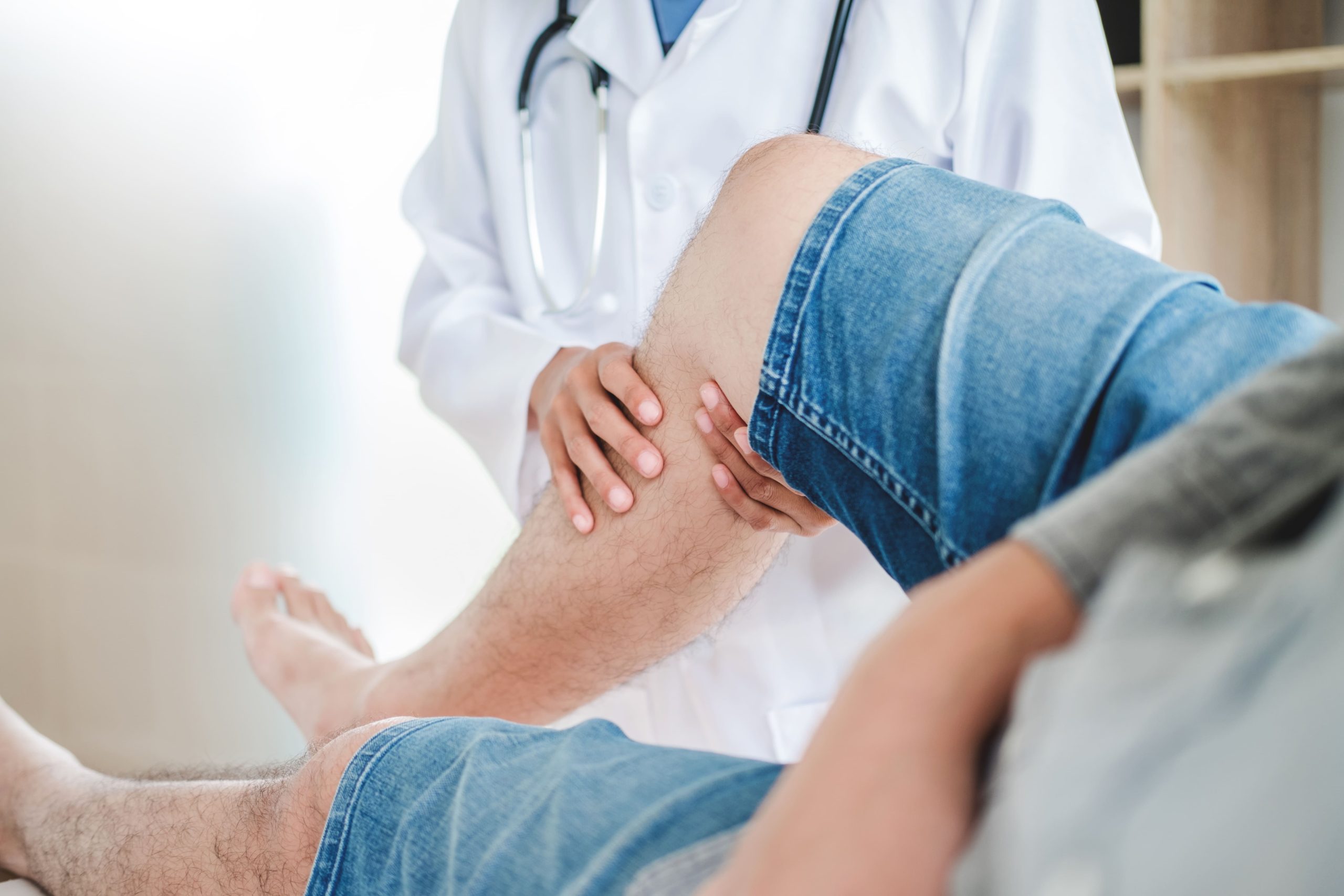
When Should You See a Knee Specialist?
Not all knee pain requires specialist input. However, certain symptoms, particularly those that persist, worsen, or begin to affect your daily routine, warrant a professional assessment to help identify the underlying cause and prevent further joint damage.
Seek prompt medical attention if you experience sudden severe pain following an injury, significant swelling within the first few hours, an inability to bear weight on the affected leg, or a visible change in the shape of the knee joint. These may indicate a fracture, ligament rupture, or other acute injury.
Common reasons patients consult a knee specialist

Pain that has not settled after a few weeks
Knee discomfort that does not improve with rest, ice, and over-the-counter pain relief within two to four weeks is worth investigating. Ongoing pain may point to a structural problem that benefits from a formal assessment.
Swelling or warmth around the joint
Swelling that develops gradually, or that returns after physical activity, can indicate fluid accumulation from conditions such as a meniscal tear, ligament injury, or early-stage arthritis.
A feeling of instability or "giving way"
A sensation that the knee is buckling, locking, or unable to bear your weight reliably may indicate ligament or cartilage damage. This symptom is generally worth discussing with a specialist, particularly if it affects your ability to carry out daily activities.
Difficulty bending or straightening the knee
A noticeable reduction in the range of movement, particularly if it interferes with climbing stairs, rising from a chair, or crouching, can reflect joint damage or progressive degeneration.
Pain during or after sport and exercise
Knee pain that consistently appears during physical activity, such as running, cycling, or court sports, and does not resolve with adequate rest may indicate a structural issue that requires assessment.
Clicking, catching, or grinding sensations
Mechanical symptoms such as clicking, a catching sensation, or grinding within the joint, particularly when accompanied by pain, can be associated with meniscal tears or cartilage changes.
Knee Conditions Treated by Dr Wang Lushun
Dr Wang provides clinical assessment and surgical management for a broad range of knee conditions. Each patient receives a structured assessment before any treatment is recommended.
Anterior Cruciate Ligament (ACL) Reconstruction
Meniscus Repair and Arthroscopy
The menisci are C-shaped cartilage structures that act as shock absorbers within the knee joint, and tears can occur either through acute injury during sport or as a result of gradual degenerative change. Treatment depends on the location, pattern, and severity of the tear, ranging from conservative management and physiotherapy to arthroscopic surgery.
Osteoarthritis of the Knee
Osteoarthritis is a degenerative joint condition in which the protective cartilage lining the knee joint gradually wears away, leading to pain, stiffness, and reduced range of motion. It is one of the most common causes of knee pain among adults aged 50 and older in Singapore. Management options range from physiotherapy, pain management, and injections through to partial or total knee replacement surgery, depending on the degree of joint degeneration and the patient’s functional requirements.
Kneecap Dislocation (Patellar Instability)
A kneecap dislocation occurs when the patella shifts out of its normal position in the trochlear groove, causing acute pain, swelling, and instability. Recurrent patellar instability may require surgical intervention to restore normal patellar tracking. Clinical assessment and imaging are used to determine whether conservative or surgical management is appropriate.
Knee Tendon Injuries
Injuries to the patellar or quadriceps tendons can result from overuse, acute trauma, or degenerative change. Symptoms include localised pain, swelling above or below the kneecap, and reduced strength when straightening the knee. Treatment is tailored to the severity of the injury and may include physiotherapy or surgical repair.
Knee Ligament Injuries
Ligament injuries affecting the knee include ACL, PCL, and collateral ligament tears, and range in severity from minor sprains to complete ruptures. Accurate diagnosis with clinical assessment and MRI is essential to determine whether surgical or non-surgical management is most appropriate.
Cartilage Injury
Damage to the articular cartilage within the knee joint can cause persistent pain, swelling, and stiffness. Treatment depends on the size, depth, and location of the cartilage lesion, as well as the patient’s age and activity level.
Revision Knee Replacement
Revision knee replacement is a procedure to remove and replace a worn, failed, or malaligned knee implant. It may be indicated when a previous knee replacement is no longer providing adequate pain relief or function. This is a complex procedure that requires careful pre-operative planning and specialised surgical expertise.
Knee Instability
A persistent sensation that the knee is giving way is often associated with ligament insufficiency or muscle weakness. A clinical assessment, including functional testing and imaging, can identify the structural cause and guide appropriate management.
Knee Replacement Surgery in Singapore
Dr Wang Lushun provides clinical assessments for patients who are considering, or have been referred for, knee replacement surgery. During your consultation, he will review your clinical history, physical examination findings, and diagnostic imaging to determine the most appropriate surgical or non-surgical option for your condition.
Partial Knee Replacement
Only the damaged compartment of the knee is replaced with a prosthesis. Healthy bone, ligaments, and cartilage in other areas of the joint are preserved. This option may be suitable for patients with localised knee arthritis who meet specific clinical criteria.
Total Knee Replacement
The entire arthritic knee joint surface is replaced with a metal and plastic prosthesis. Total knee replacement is one of the most commonly performed and well-studied orthopaedic procedures worldwide, with the majority of patients experiencing significant pain relief and improved function.
Revision Knee Replacement Surgery
A revision procedure is performed to remove a previous implant and replace it with a new one. This may be required for implants that have loosened, worn out, or become infected over time. Revision surgery is technically complex and requires specialised planning.
Robotic-Assisted Knee Replacement
Dr Wang utilises robotic-assisted surgical technology to precisely align and position the knee implant during surgery. The robotic system uses preoperative imaging data to create a personalised surgical plan tailored to each patient’s anatomy. Suitability for robotic-assisted knee surgery depends on a range of clinical factors, which Dr Wang will assess during your consultation.

Dr Wang Lushun
Senior Consultant Orthopaedic Surgeon
MBBS (Singapore)
MRCS (Edin)
MMed (Ortho)
FRCS (Ortho) (Edin)
Internationally Recognised & Double Fellowship-Trained Surgeon With Over 18 Years of Experience
- Bachelor of Medicine & Bachelor of Surgery (MBBS),
National University of Singapore - Member of The Royal College of Surgeons (MRCS),
Edinburgh, United Kingdom - Master of Medicine in Orthopaedic Surgery (MMed),
National University of Singapore - Fellow of The Royal College of Surgeons in Orthopaedics and Traumatology (FRCS), Edinburgh, United Kingdom
As a Senior Consultant Orthopaedic Surgeon and former Head of the Hip and Knee Division in Ng Teng Fong Hospital, he has won awards for superior patient outcomes (value driven), service quality and enhanced recovery programmes. His patients include current and former national athletes and sporting professionals.
What to Expect at Your Appointment
From Assessment to Diagnosis
Consultations begin with a review of your medical history and a physical examination of the knee. Diagnostic imaging, such as X-rays or MRI scans, may be ordered to evaluate structural details. The surgeon explains findings and options thoroughly before deciding on a plan.
Arthroscopic & Keyhole Approaches
Where clinically appropriate, procedures are performed using minimally invasive techniques. These methods aim to minimise soft tissue disruption, supporting post-operative physical therapy and rehabilitation.
Post-Operative Rehabilitation
Follow-up appointments monitor healing, wound recovery, and joint mobility. Structured physiotherapy forms a routine part of post-operative management, tailored to individual progress.
Consultation and Surgery Costs
The figures below are provided to help patients make informed healthcare decisions. All costs are estimates based on historical benchmarks for private inpatient procedures in Singapore. Final costs depend on the specific procedure, clinical complexity, implant selection, and the hospital facility used.
CONSULTATION FEES
| Service | Estimated Fee (Nett) |
|---|---|
| Initial Consultation | From S$180 |
| Follow-up Consultation | From S$120 |
ESTIMATED SURGICAL COSTS (PRIVATE)
Total surgical cost includes the surgeon’s fee, anaesthetist’s fee, and hospital facility charges, inclusive of implants and ward charges.
| Procedure | Estimated (Private) |
|---|---|
| ACL Reconstruction Surgery | S$29,514 – S$36,467 |
| Meniscus Repair / Arthroscopy | S$19,103 – S$31,209 |
| Total Knee Replacement (Single) | S$36,895 – S$48,590 |
Estimates vary by facility, implants, and complexity.
For Partial Knee Replacement, the cost varies depending on the extent of the procedure and the implant used. Your surgeon can provide a personalised estimate upon assessment.
Medisave
At Dr LS Wang Orthopaedics, we accept patients with and without insurance coverage. Our clinic is on the specialist panels of major health networks and insurance providers in Singapore, and our administrative team is available to assist you in understanding your coverage options ahead of your appointment. Patients are encouraged to contact us directly so we can help clarify what information may be required by your insurer.
For surgical procedures, we are able to assist eligible patients in the process of obtaining a Letter of Guarantee (LOG) from applicable insurers. Our team provides transparent fee information and can outline the general process involved, so you have a clearer picture before proceeding with treatment.
For Singapore Citizens and Permanent Residents, certain knee treatments and surgical procedures may be claimable under Medisave, subject to eligibility criteria and the prevailing withdrawal limits. We recommend discussing your individual coverage and financing options during your consultation, where our team can provide guidance based on your specific circumstances.
Integrated Shield Plans
If you hold an Integrated Shield Plan, our team can assist with applying for a Letter of Guarantee (LOG) for eligible inpatient procedures. Please confirm the scope of your specialist coverage with your insurer before your appointment.
CHAS Subsidies
Our clinic accepts CHAS Blue and CHAS Orange cards. Eligible cardholders receive subsidised consultations for chronic and acute conditions. Please present your CHAS card and NRIC at registration.

Preparing for Your Consultation
To allow for an efficient clinical assessment at your first appointment, please bring the following:
- Any previous X-ray or MRI films and reports relating to your knee condition
- A list of your current medications and any known allergies
- Details of your insurance provider or corporate healthcare benefits, if applicable
- Loose-fitting clothing or shorts to allow for a physical examination of the knee joint
Frequently Asked Questions
Is my condition serious enough to see an orthopaedic specialist?

A clinical assessment is advisable if you have persistent knee pain that does not improve with rest, a sensation of instability, or joint locking. An orthopaedic surgeon can arrange diagnostic imaging, such as X-rays or MRI, to identify structural issues, including ACL tears, meniscus damage, or osteoarthritis. Early assessment can prevent conditions from worsening and allows for more conservative treatment options to be considered.
What can I expect at my first consultation with Dr Wang?
During your initial consultation, Dr Wang will conduct a physical examination and review your medical history. Your symptoms will be discussed in detail, and diagnostic scans may be arranged if required. You will receive a clear explanation of your condition and the available treatment options, ranging from physiotherapy and medication to surgical intervention. No treatment decision is made without your informed consent.
What is the typical recovery timeline after knee replacement surgery?
Recovery timelines vary according to overall health, procedure type, and physical therapy engagement. Many patients begin walking with mobility aids within one to two days after surgery, and gradually resume routine daily tasks over four to six weeks.
Can I use Medisave for ACL reconstruction or knee arthroscopy?
Yes. Medisave may be used for eligible surgical procedures, including ACL reconstruction and arthroscopic knee surgery, subject to prevailing withdrawal limits. Certain outpatient diagnostic scans may also be Medisave-claimable. Our clinic team will advise you on the claimable amounts applicable to your specific procedure during a financial counselling session.
What is the difference between partial and total knee replacement?
A partial knee replacement replaces only the damaged compartment of the knee, preserving the healthy bone and ligaments in the remaining joint. A total knee replacement resurfaces the entire knee joint. Partial replacement may be suitable for patients with osteoarthritis confined to one compartment of the knee, while total replacement is typically indicated for more widespread joint degeneration. Dr Wang will advise which option is most appropriate based on your imaging and clinical examination findings.
Is robotic-assisted knee surgery worth considering?
Robotic-assisted surgery uses pre-operative imaging to create a personalised surgical plan and assists the surgeon in achieving precise implant positioning based on the patient’s individual anatomy. Suitability depends on the degree of joint degeneration, the patient’s anatomy, and other clinical factors. Dr Wang will advise whether this approach is appropriate for your case following a full clinical evaluation. The procedure is performed at selected hospital facilities in Singapore.
Does the clinic accept Integrated Shield Plans?
Yes. Our clinic works with major insurance providers in Singapore to facilitate claims under Integrated Shield Plans. If your plan includes specialist coverage, our team can assist with applying for a Letter of Guarantee (LOG) to manage inpatient hospital expenses. We recommend confirming the scope of your coverage with your insurer before your consultation.
What are the signs of a meniscus or ACL tear?
Patients with a meniscus or ACL tear often report a distinct popping sensation at the time of injury, followed by rapid swelling and joint instability. Other symptoms include a locking sensation where the knee becomes stuck in position, or difficulty fully straightening or bending the leg. A clinical assessment and diagnostic imaging are necessary to confirm the extent and location of any structural damage.
How do I know if I need a knee specialist or a physiotherapist?
Physiotherapy is often an appropriate first step for mild or moderate knee symptoms. A knee specialist assessment is advisable if your symptoms persist despite physiotherapy, if you have experienced a significant injury such as a suspected ligament or cartilage tear, if your knee is locking or giving way, or if your pain is limiting your ability to perform daily activities. An orthopaedic surgeon can advise whether further investigation or surgical management is warranted.
Our Clinic Locations

3 Mount Elizabeth, #13-14
Mount Elizabeth Medical Centre
Singapore 228510

