

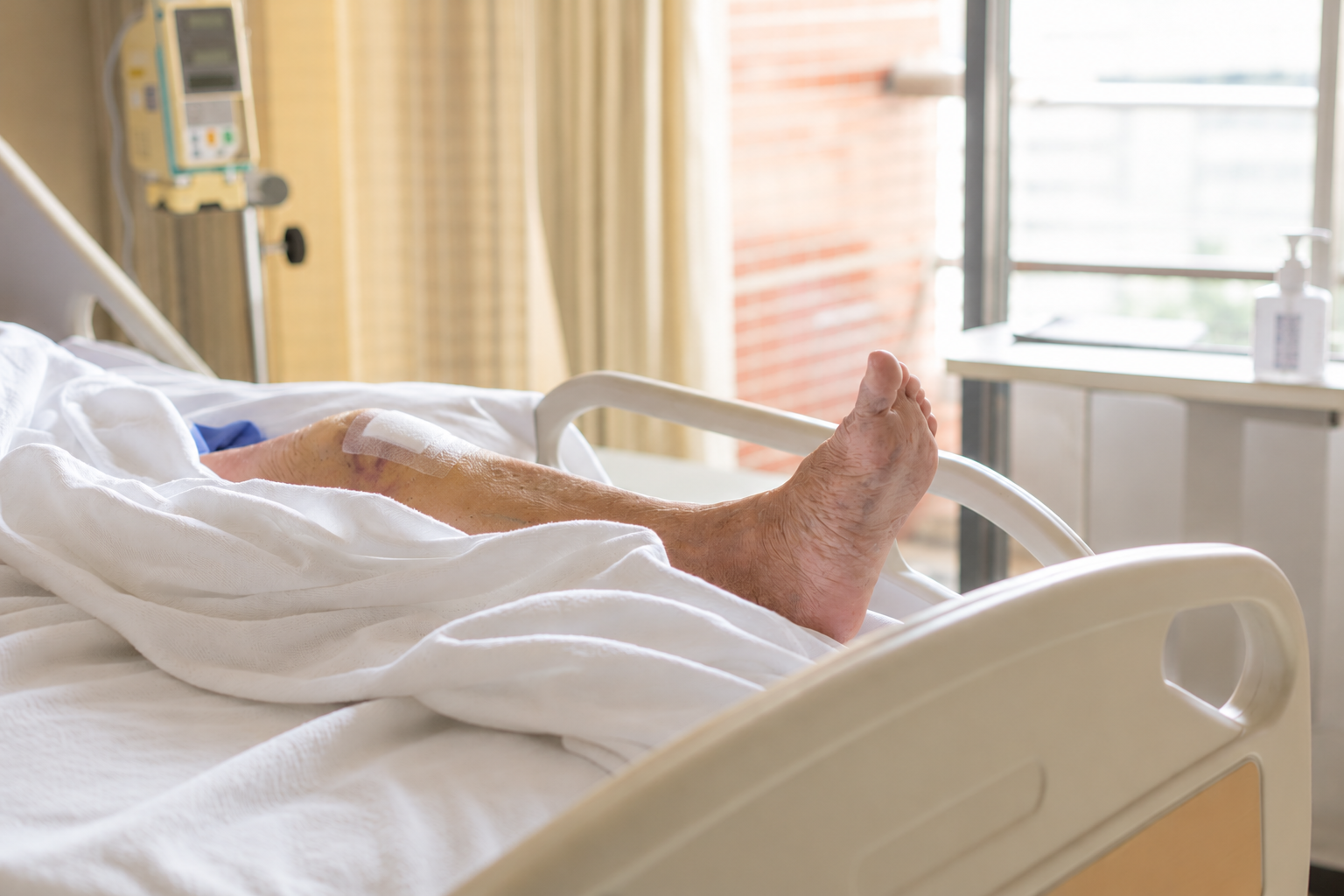
Waking up after knee surgery and noticing that your foot feels numb or tingly is a post-operative symptom some patients experience. Foot numbness after knee surgery may be caused by nerve irritation or compression related to the procedure or swelling. In some cases, sensation may take several months to a year to improve, though individual recovery timelines vary. Numbness that persists or worsens may point to nerve involvement, and sudden changes such as a cold, pale, or bluish foot require urgent medical evaluation.
Why Is My Foot Numb After Knee Surgery?
Foot numbness after knee surgery is a post-operative experience some patients report. The causes range from temporary pressure on a nerve during surgery to mild swelling pressing on surrounding tissue, and in many cases sensation gradually returns as healing progresses.
How Knee Surgery Can Affect the Nerves in Your Leg
Post-surgical nerve-related numbness refers to a temporary or persistent reduction in sensation in the foot or lower leg that occurs after knee surgery. It happens when nerves that travel through or near the surgical site are affected by pressure, swelling, or the positioning required during the procedure. This type of numbness is a recognised part of the post-operative experience for some patients.
Think of the nerves in your leg like a garden hose carrying water. If you press on the hose, or kink it at a bend, the flow slows or stops. Once the pressure is released, flow returns. Nerves behave similarly: temporary compression reduces the signals they carry, and once the pressure eases, sensation may gradually come back.
The Common Peroneal Nerve and Why It Matters
The common peroneal nerve is one of the most relevant structures when it comes to numbness in the foot after knee surgery. This nerve branches off near the back of the knee and travels around the outer side of the knee joint before continuing down the leg to the foot. Because of its position close to the surface of the skin and bone at the outer knee, it can be vulnerable to pressure or stretch during surgery. If this nerve is compressed, you may notice numbness, tingling, or weakness along the outer lower leg and the top of the foot. Peroneal nerve problems after knee replacement are considered a rare complication, and they are more often linked to factors such as correction of knee deformity (valgus).
How Swelling and Inflammation Press on Nerves
After any knee procedure, the body responds with swelling and inflammation as part of the natural healing process. This swelling can increase pressure within the tissues surrounding the knee and lower leg, which in turn may press on nearby nerves. The result is often a dull numbness or tingling sensation that may extend into the foot. As swelling reduces over the days and weeks following surgery, this type of nerve pressure may ease, and sensation can return.
The Role of Tourniquets and Surgical Positioning
Many knee surgeries require the use of a tourniquet: an inflatable cuff placed around the upper thigh to temporarily reduce blood flow to the surgical area. This allows the surgeon to operate in a clearer field. Sustained pressure from a tourniquet may temporarily affect nerve function in the leg, although studies differ on how much it contributes. Similarly, the positioning required to keep the leg stable during surgery may place the knee and surrounding nerves in a position that creates mild, temporary compression. These factors may contribute to post-operative foot numbness, and recovery varies between individuals.
Causes of Foot Numbness After Different Types of Knee Surgery
The cause and duration of numbness may depend on the type of knee surgery performed. Different procedures carry different risk profiles, and understanding which category applies to you can help frame what you might expect during recovery.
|
Knee Surgery Type |
Typical Causes of Foot Numbness |
How Often It May Occur |
General Recovery Outlook |
| Total knee replacement | Tourniquet use, surgical positioning, post-operative swelling, peroneal nerve stretch | Peroneal nerve involvement is uncommon | Many cases resolve within weeks to a few months; persistent cases may take 6 to 12 months or longer and warrant review |
| ACL reconstruction | Graft harvest site, portal placement, leg positioning, post-operative swelling | May occur | Often resolves within weeks; tingling near graft sites may take longer |
| Knee arthroscopy | Tourniquet use, portal placement, swelling | Usually mild when it occurs | Often short-lived; discuss persistent symptoms with your surgical team |
| Meniscus repair | Surgical positioning, swelling, traction applied during procedure | May occur | Generally resolves as swelling settles; persistent symptoms should be assessed |
Numbness in Foot After Knee Replacement
Total knee replacement involves a more extensive surgical approach than keyhole procedures, which means greater tissue disruption and a more significant inflammatory response. The peroneal nerve may be at particular risk in some patients due to the positioning required during surgery and the correction of pre-existing deformity, which can stretch the nerve as the leg is realigned. Tourniquet use during the procedure may also contribute. Many patients find that sensation improves progressively as swelling subsides and rehabilitation progresses.
Tingling in Foot After ACL Surgery
ACL (anterior cruciate ligament) reconstruction typically involves harvesting tissue from elsewhere in the knee (such as the hamstring tendon or the patellar tendon) to create a new ligament. The surgical portals, harvest sites, and leg positioning can all create localised pressure or irritation of nearby nerves. Altered sensation after ACL surgery is often felt around the knee or lower leg, and tingling that reaches the foot is related to swelling or mild nerve irritation in some cases. This type of tingling is generally temporary and may improve as the knee heals and physiotherapy progresses.
Numbness Following Knee Arthroscopy or Meniscus Repair
Knee arthroscopy (a keyhole surgical technique using a small camera to examine and treat the inside of the knee joint) and meniscus repair are less extensive procedures, but they still involve tourniquet use, fluid distension of the joint, and sustained leg positioning. Mild foot numbness or tingling following these procedures is often short-lived. If numbness persists beyond the first week or two, it is worth discussing with your surgical team.
Nerve Damage Symptoms After Knee Surgery
Not all post-surgical numbness is the same. Mild, temporary numbness that fades over a few days is a different experience from nerve-related symptoms after knee surgery that persist, worsen, or begin to affect your ability to move normally.
Temporary Numbness Compared to Persistent Nerve Changes
Temporary numbness typically presents as a mild reduction in sensation in a localised area of the foot or lower leg. It may feel like the area has “gone to sleep,” and it may gradually improve as swelling reduces and the nerve recovers. Persistent nerve changes, by contrast, do not follow this pattern. If numbness remains unchanged or worsens after several weeks, or if the area of numbness expands, this warrants further assessment.
Foot Drop and Muscle Weakness
Foot drop refers to difficulty lifting the front part of the foot when walking. It occurs when the peroneal nerve, which controls the muscles responsible for lifting the foot, is significantly affected. You may notice that your foot drags when you walk, or that you need to lift your knee higher than usual to clear the ground. Foot drop is a more significant symptom that a surgeon should assess promptly.
Burning, Tingling, or “Pins and Needles” Sensations
A burning sensation, persistent tingling, or “pins and needles” in the foot can indicate that a nerve is in the process of recovering. However, if these sensations are intense, constant, or accompanied by muscle weakness, they may indicate a more significant nerve injury. Keeping a note of when these sensations occur, how long they last, and whether they are improving or worsening will help your surgical team assess the situation accurately.
How Long Does Foot Numbness After Knee Surgery Typically Last?
For many patients, foot numbness after knee surgery improves within days to weeks as post-operative swelling reduces and temporary nerve compression resolves. Numbness caused by mild nerve stretch or irritation may take several weeks to a few months to improve. Where a nerve has been more significantly affected, recovery may extend over a longer period. Recovery after peroneal nerve palsy varies among individuals, and some cases take six months or longer. Factors affecting timeline include the type of surgery, extent of nerve involvement, and rehabilitation consistency. Individual results vary.
Recovery Timeline at a Glance
|
Cause |
Typical Duration |
| Post-operative swelling pressing on nerves | Days to 1 to 2 weeks |
| Tourniquet or positioning-related compression | Days to a few weeks |
| Mild nerve stretch or irritation | Several weeks to 2 to 3 months |
| More significant nerve involvement | 3 to 6 months or longer; specialist review recommended |
If numbness is not showing signs of improvement after around 4 to 6 weeks, or earlier if it is worsening, you may wish to discuss this with your surgeon.
What Helps Relieve Foot Numbness After Knee Surgery
There are several practical approaches that may help with foot numbness after knee surgery. You may wish to discuss these with your surgical team or physiotherapist as part of your recovery plan.
Managing Swelling to Reduce Nerve Pressure
Reducing swelling may help ease nerve-related numbness in the early post-operative period. Elevating your leg above the level of your heart when resting can encourage fluid to drain away from the knee and lower leg. Applying ice packs (wrapped in a cloth to protect the skin) in short intervals may also help manage localised swelling. Compression stockings or bandages, if recommended by your surgical team, can assist in controlling fluid accumulation. Following your surgeon’s guidance on activity levels in the first few weeks is equally important, as overexertion can increase swelling and prolong nerve pressure.
Physiotherapy and Gentle Mobilisation
Physiotherapy plays a central role in recovery after knee surgery. Gentle movement encourages circulation, reduces stiffness, and may help the nervous system re-establish normal signalling pathways. Your physiotherapist may incorporate exercises that specifically target foot and ankle mobility, as well as nerve gliding techniques (gentle movements designed to encourage a nerve to move freely within its surrounding tissue). Consistent engagement with your rehabilitation programme supports both your knee recovery and the resolution of foot numbness.
When Further Investigation May Be Recommended
If numbness persists beyond the expected recovery window, or if you develop symptoms such as foot drop, progressive weakness, or significant changes in sensation, your surgeon may recommend further investigation. This could include nerve conduction studies (tests that measure how well electrical signals travel along a nerve) or imaging to assess the structures around the knee and lower leg. These investigations help identify whether a specific nerve is involved and guide decisions about further management.
Clinical Insights
In clinical practice involving knee replacement and sports knee surgery, post-operative numbness is evaluated as part of the overall recovery picture. Assessing foot sensation and lower limb nerve function forms a standard part of post-operative reviews following knee procedures, particularly after total knee replacement where peroneal nerve function is relevant.
Experience in managing complex knee cases highlights the importance of early identification and systematic monitoring of nerve-related symptoms. Patients who communicate changes in sensation promptly enable the clinical team to evaluate whether symptoms align with expected post-operative progress or require further investigation.
When to Seek Professional Help
- Numbness that is getting worse rather than gradually improving
- Foot drop: difficulty lifting the front of your foot when walking
- Progressive muscle weakness in the foot or lower leg
- Numbness that spreads to a larger area of the foot or leg
- No improvement in sensation after around 4 to 6 weeks
- Severe burning or electric-shock sensations that are worsening over time
- Skin colour changes in the foot (pallor, bluish discolouration, or mottling), especially with coldness, severe pain, or a swollen, painful calf. Seek urgent medical attention for these signs, and do not wait for a scheduled review.
Seeking a review when these signs are present gives your surgeon the opportunity to assess whether your recovery is on track and, if needed, to arrange further investigation early.
Commonly Asked Questions
Is it normal to have numbness in my foot after knee replacement?
It can be a recognised post-operative experience. The peroneal nerve, which runs close to the outer knee, may be affected by surgical positioning, tourniquet use, or post-operative swelling. Mild numbness may improve as healing progresses. If it persists beyond several weeks or worsens, a review with your surgeon is advisable.
Can nerve involvement from knee surgery be permanent?
Significant permanent nerve involvement following knee surgery is uncommon. Many cases involve temporary compression or irritation, and sensation may return as the nerve recovers. In cases where a nerve has sustained more substantial involvement, recovery may take longer and varies between individuals. A surgeon can assess the extent of nerve involvement and advise on the expected recovery trajectory for your specific situation.
Should I see a specialist if my foot is still numb weeks after surgery?
If numbness in your foot has not shown signs of improvement after around 4 to 6 weeks, or if it is accompanied by weakness, foot drop, or worsening sensations, a specialist review may be a sensible course of action. Early assessment allows your surgical team to determine whether the pattern is consistent with normal recovery or whether further investigation is needed.
Does tingling in my foot after ACL surgery mean something went wrong?
Not necessarily. Tingling after ACL surgery may be related to post-operative swelling or mild nerve irritation near the graft harvest site or surgical portals, and is generally temporary. However, if the tingling is persistent, worsening, or accompanied by weakness, it is worth discussing with your surgeon to assess whether further evaluation is needed.
What is the difference between numbness from swelling and numbness from nerve involvement?
Numbness from swelling tends to be diffuse, mild, and may improve progressively as swelling reduces, typically within the first one to two weeks. Numbness from nerve involvement may be more localised to a specific nerve distribution, can persist beyond the initial swelling phase, and may be accompanied by weakness or more intense sensations such as burning or electric-shock feelings. A clinical assessment, and if needed a nerve conduction study, can help distinguish between the two.
Next Steps
If you are experiencing foot numbness after knee surgery, monitoring your symptoms closely is an important first step. Focus on managing post-operative swelling through elevation and ice as advised by your healthcare team, and maintain consistent engagement with your recommended physiotherapy routine. Keeping a daily record of any changes in sensation, mobility, or muscle strength will help your surgical team evaluate your recovery progress accurately.
If your numbness persists beyond four to six weeks, progressively worsens, or is accompanied by weakness such as foot drop, consider reaching out to your orthopaedic surgeon for a thorough clinical evaluation to determine the appropriate management plan for your recovery.
Speak With an Orthopaedic Specialist About Your Recovery
If foot numbness after knee surgery is affecting your recovery progress, speaking with a specialist may provide clarity. A personalised assessment can help identify the likely cause of your symptoms and support a recovery plan tailored to your situation and your goals for returning to active living. For related concerns below the knee, you may also wish to read about our foot and ankle specialist services.


