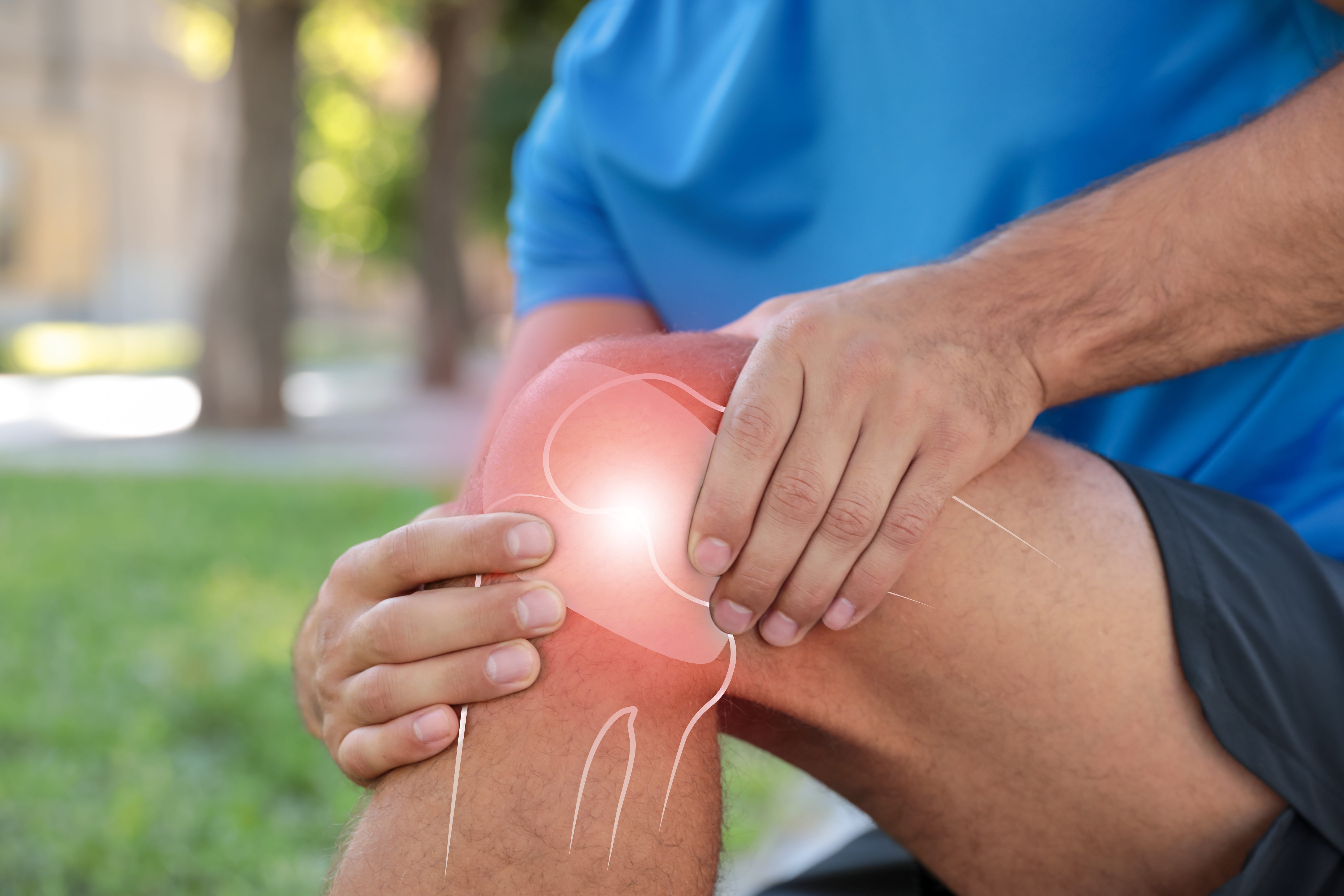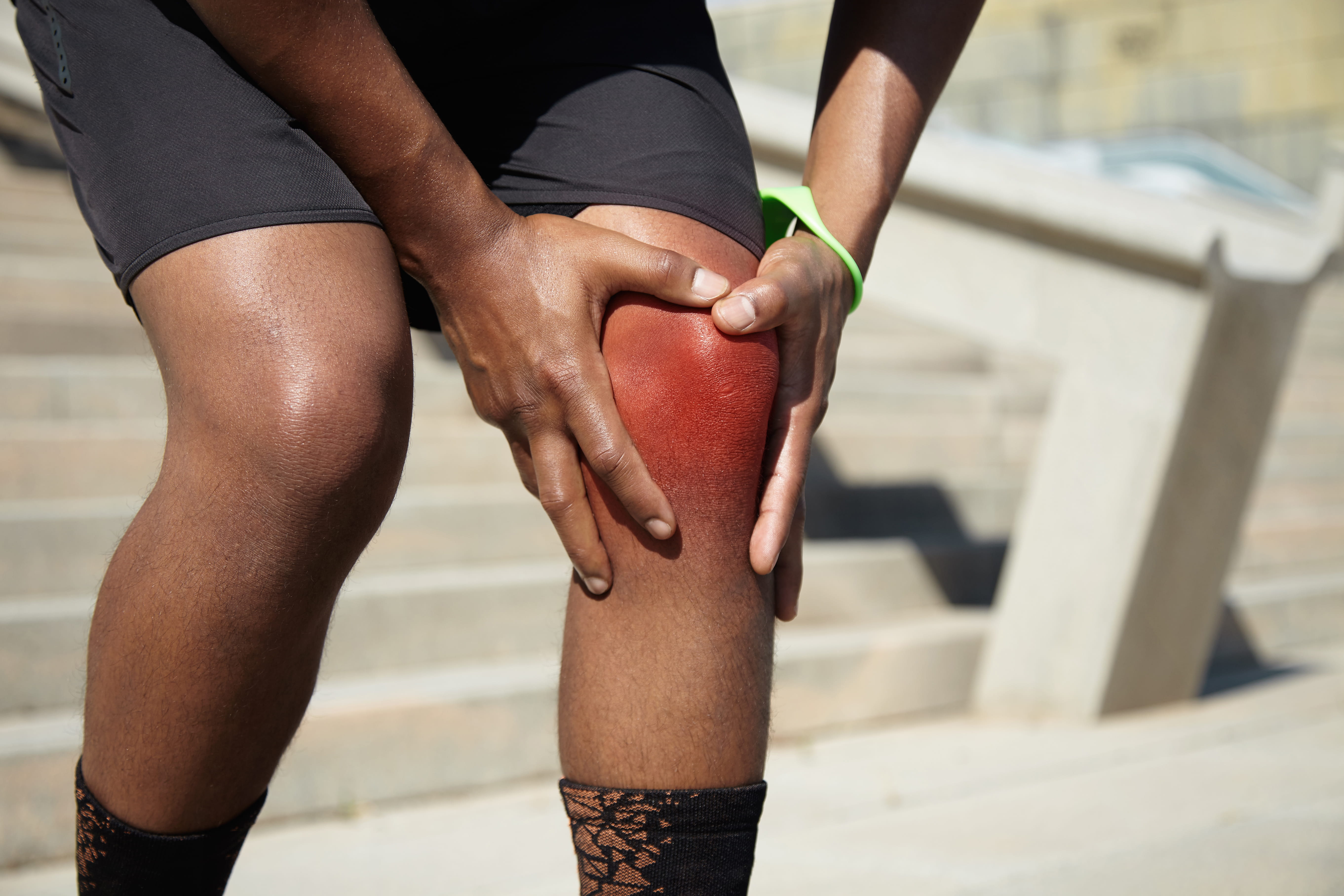

“Bone-on-bone” knee pain occurs when protective cartilage deteriorates, allowing the thigh and shin bones to make direct, painful contact during movement. This condition often represents a multi-stage degenerative process characterised by progressive cartilage wear and bone remodelling that may develop over many years. Identifying your specific stage of osteoarthritis is essential for guiding clinical conversations and selecting suitable treatment options to manage pain and preserve mobility.
How Knee Cartilage Breaks Down
Knee cartilage is a highly specialised, low-friction tissue that has no direct blood supply, making it uniquely vulnerable to permanent damage.
- Sponge-Like Nutrition: Because it lacks blood vessels, cartilage relies on joint movement to “pump” nutrients in and waste out through synovial fluid.
- Structural Matrix: Cells called chondrocytes maintain a complex framework of collagen and water-retaining proteoglycans that provide shock absorption.
- Frictionless Surface: In its healthy state, articular cartilage is a low-friction surface, allowing bones to glide without irritation.
- Limited Regeneration: Unlike most tissues, cartilage does not readily repair its original structure once the collagen framework is compromised.
The Degradation Process
Chronic loading creates micro-fissures in the cartilage that eventually shed debris into the joint fluid, triggering an inflammatory loop of swelling and accelerated tissue breakdown. To compensate for this loss, the body develops bony spurs, known as osteophytes, at the joint margins to provide stability. Simultaneously, the underlying bone undergoes subchondral sclerosis, hardening, and increased density to manage the rising mechanical pressure.
Stage Zero: Normal Joint
A healthy knee shows uniform joint space on X-ray. This indicates intact cartilage thickness throughout. The bone surfaces appear smooth, with no irregularities at the margins. No osteophytes (bony spurs) are present.
At this stage, the cartilage absorbs and distributes forces during walking, running, and jumping. The joint produces adequate synovial fluid, or the lubricating liquid inside the joint, for smooth movement. Movement occurs without pain, stiffness, or mechanical symptoms.
Stage One: Doubtful Osteoarthritis
The Kellgren-Lawrence system classifies Stage One as “doubtful” because X-ray findings are subtle. They may represent normal variation. Minor osteophyte (bony spur) formation might appear at joint margins, but joint space remains preserved.
Clinical Presentation
Individuals at this stage may experience no symptoms. Some report occasional mild discomfort after prolonged activity that resolves quickly with rest. Morning stiffness, if present, lasts only minutes.
Physical examination typically reveals a full range of motion without crepitus (a grinding or crackling sensation). The knee appears normal without swelling or warmth.
What’s Happening Inside the Joint
Microscopic changes have begun within the cartilage matrix. The collagen network (the structural framework of cartilage) shows early disorganisation. Water content within the tissue increases slightly. These changes affect the cartilage’s mechanical properties before visible thinning occurs.
Stage Two: Mild Osteoarthritis
Stage Two typically shows clearer signs of osteoarthritis on imaging. Osteophytes (bony spurs) are clearly visible. Minimal joint space narrowing may appear in the affected compartment—typically the medial (inner) side of the knee.
Symptoms and Function
Pain emerges as a recognisable pattern at this stage. Discomfort typically occurs after prolonged walking, stair climbing, or rising from a seated position. The pain localises to specific areas of the knee rather than presenting as diffuse ache.
Stiffness becomes more predictable, particularly in the morning or after sitting for extended periods. This “gelling phenomenon” (temporary stiffness after periods of rest) usually resolves within 30 minutes of movement.
Activity Modifications
Many individuals unconsciously modify their activities at this stage. Walking distances may decrease. Activities involving deep knee bending become less comfortable. These adaptations often happen gradually, making them easy to overlook.
Stage Three: Moderate Osteoarthritis
Moderate osteoarthritis shows definite joint space narrowing on X-ray. Multiple osteophytes (bony spurs) are present. Early subchondral sclerosis (increased bone density beneath the cartilage) becomes visible. The cartilage has thinned substantially but hasn’t disappeared completely.
Pain Characteristics
Pain at Stage Three may occur more frequently and with less provocation. Walking moderate distances consistently triggers discomfort. Night pain may develop, particularly when lying on the affected side.
The character of pain often changes. Sharp sensations during specific movements indicate mechanical irritation. Dull aches reflect ongoing inflammation (tissue response that can cause swelling and discomfort). Some individuals experience both patterns.
Physical Changes
Examination reveals measurable differences from the healthy knee. Range of motion decreases, particularly in full flexion (bending) and extension (straightening). Crepitus (a grinding sensation during movement) becomes palpable. Mild swelling may be present, reflecting increased synovial fluid production (extra joint fluid the body produces in response to irritation).
Muscle weakness develops as pain inhibits full quadriceps (thigh muscle) activation. This weakness creates a cycle: reduced muscle strength increases joint stress, accelerating cartilage damage.
Impact on Daily Life
Activities requiring knee flexion (bending) beyond a certain threshold become challenging. Squatting, kneeling, and using stairs are consistently difficult. Many individuals begin using handrails routinely and avoid sitting in low chairs.
Stage Four: Severe Osteoarthritis (Bone-on-Bone)
Stage Four represents true bone-on-bone contact. X-rays show marked joint space narrowing with bone surfaces approaching or touching. Large osteophytes (bony spurs) are present. Subchondral sclerosis (bone hardening below the cartilage) is pronounced. Bone cysts called geodes (fluid-filled pockets within the bone) may form within the adjacent bone.
The Reality of Bone-on-Bone Contact
When cartilage disappears completely, the exposed bone surfaces undergo changes. The smooth cortical bone (the hard outer layer) becomes eburnated—polished and hardened from direct contact. This altered bone lacks the shock-absorbing properties of healthy cartilage-covered surfaces.
Without cartilage, the nerve-rich bone experiences direct mechanical stimulation during weight-bearing. This may explain why bone-on-bone arthritis can cause pain with nearly every step.
Symptom Severity
Pain at Stage Four is often constant. It is present at rest and worse with activity. Night pain disrupts sleep. Walking distances decrease substantially. Many individuals can manage only household distances without significant discomfort.
Joint deformity may become visible. Varus (bow-legged) alignment commonly develops as the medial compartment (inner knee area) collapses. This malalignment concentrates forces further, perpetuating the damage.
Functional Limitations
Daily tasks may become more challenging. Bathing, dressing, and household chores require modification or assistance. Employment involving standing or walking may become unsustainable.
How Staging Guides Treatment Decisions
The stages of knee osteoarthritis directly influence treatment recommendations. Your doctor will consider your disease stage, symptoms, activity goals, and overall health to develop a treatment plan tailored to your individual needs. Earlier stages respond to conservative measures that become less effective as the disease progresses.
Conservative Management for Earlier Stages
Stages One to Two typically respond well to:
- Weight management: Body weight directly affects force across the knee during walking
- Exercise therapy: Strengthening programmes targeting the quadriceps (thigh muscles) and hip muscles reduce joint stress
- Activity modification: Switching from high-impact to low-impact activities preserves function while reducing cartilage stress
- Oral medications: Anti-inflammatory medications (drugs that reduce swelling and pain) provide symptomatic relief during flares
Interventions for Moderate Disease
Stage Three may benefit from additional interventions:
- Viscosupplementation: Hyaluronic acid injections (treatments that add lubricating fluid to the joint) can improve joint lubrication
- Corticosteroid injections: Provide temporary but meaningful pain relief during acute flares (periods of increased pain and swelling)
- Bracing: Unloader braces (supportive devices) shift weight away from the damaged compartment
Surgical Options for Severe Disease
Stage Four osteoarthritis that fails conservative management typically requires surgical intervention. Total knee replacement (a procedure where the doctor removes damaged joint surfaces and replaces them with artificial components) is a commonly performed treatment. Partial replacement is suitable for a disease isolated to one compartment. Osteotomy (a procedure where the surgeon cuts and realigns the bone) can delay replacement in younger patients with isolated disease. You may consult and schedule your knee replacement surgery in Singapore by reaching out to Dr Wang Lushun.
When to Seek Professional Help
- Persistent & Night Pain: Discomfort that continues despite rest and medication, or pain that disrupts your sleep.
- Morning Stiffness & Swelling: Joint stiffness lasting over 30 minutes each morning or visible swelling and deformity.
- Instability & “Giving Way”: Feeling the knee is unstable or buckling during weight-bearing activities.
- Functional Decline: Significant difficulty with daily tasks like dressing, bathing, or a substantial decrease in walking distance.
- Medication Dependency: Requiring regular over-the-counter or prescription medication just to maintain basic daily function.
If you are suffering with any of the symptoms above, you might want to consult with a Knee Specialist in Singapore.
Commonly Asked Questions
Can bone-on-bone arthritis heal on its own?
While cartilage has limited regenerative capacity, symptoms can often be managed effectively with appropriate treatment tailored to individual needs.
How quickly does osteoarthritis progress from Stage Two to Stage Four?
Progression varies considerably. Some individuals remain stable for years while others advance through stages within months. Weight, activity level, alignment, and biological factors all influence the rate of deterioration. Regular monitoring helps identify rapid progressors who may benefit from earlier intervention.
Do I need surgery if I have bone-on-bone arthritis?
Not all patients with bone-on-bone changes require surgery. Your doctor will assess your symptoms, functional limitations, and treatment goals to determine whether surgical intervention may be beneficial for your situation.
Is walking harmful for arthritic knees?
Moderate walking actually benefits arthritic joints by maintaining muscle strength, promoting cartilage nutrition, and controlling weight. The key is finding the right balance—enough activity to maintain function without provoking excessive pain. Your orthopaedic specialist can provide personalised advice on appropriate activity levels.
Can injections cure knee osteoarthritis?
Injections provide symptomatic relief but don’t reverse structural damage. Corticosteroid injections (treatments that deliver anti-inflammatory medication directly into the joint) temporarily reduce inflammation. Hyaluronic acid injections (treatments that add a lubricating substance to the joint) may improve joint lubrication. Neither restores lost cartilage nor halts disease progression, though both may help improve comfort and function for periods of time.
Next Steps
Identifying your current stage allows for targeted intervention. Tracking symptoms over time helps determine whether your current approach needs adjustment.
If you’re experiencing persistent knee pain, night pain that disrupts sleep, or difficulty with daily activities like climbing stairs or walking moderate distances, a consultation with Dr Wang Lushun can help determine your condition through clinical examination and imaging to determine your disease stage and discuss treatment options.