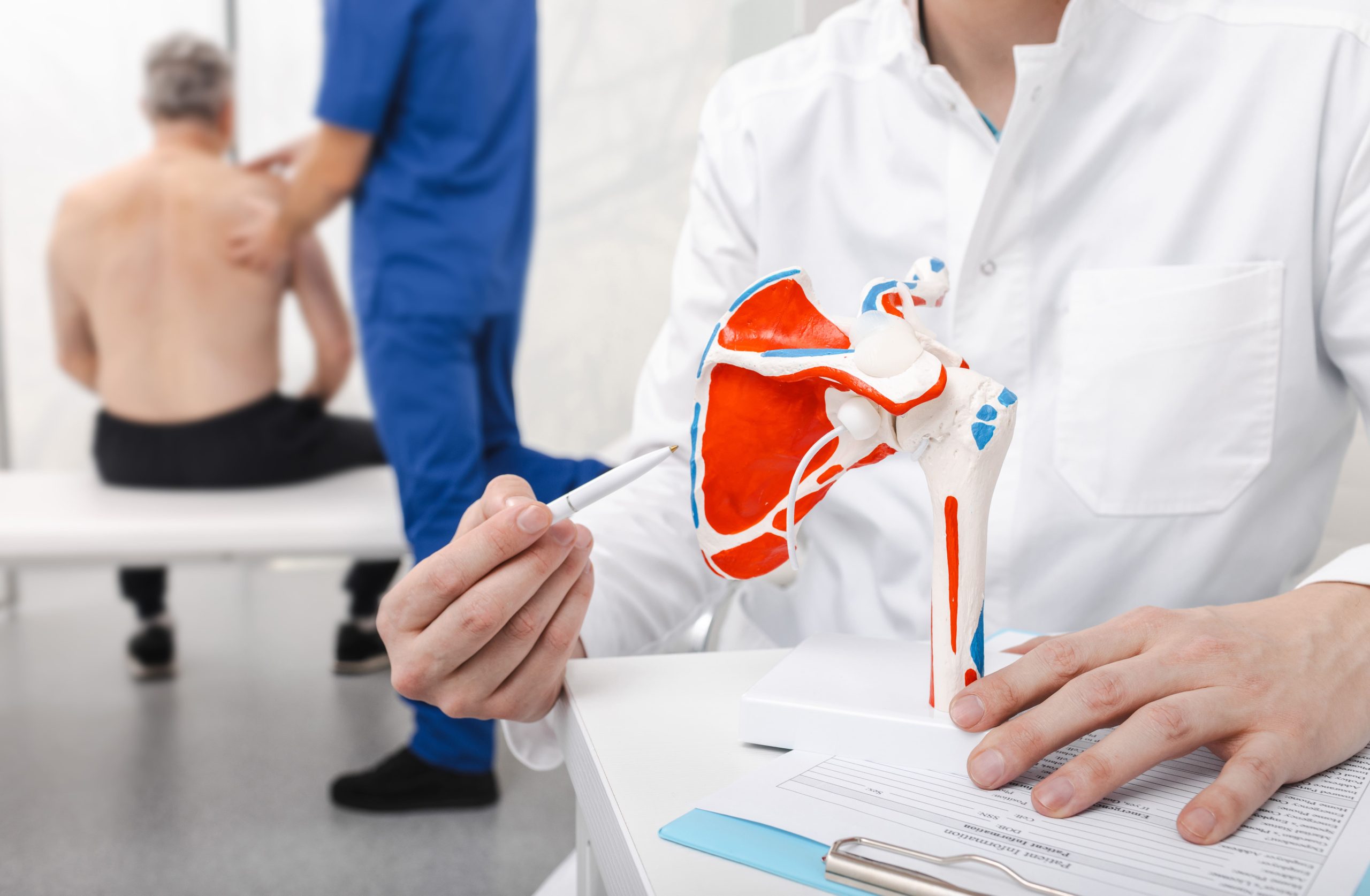
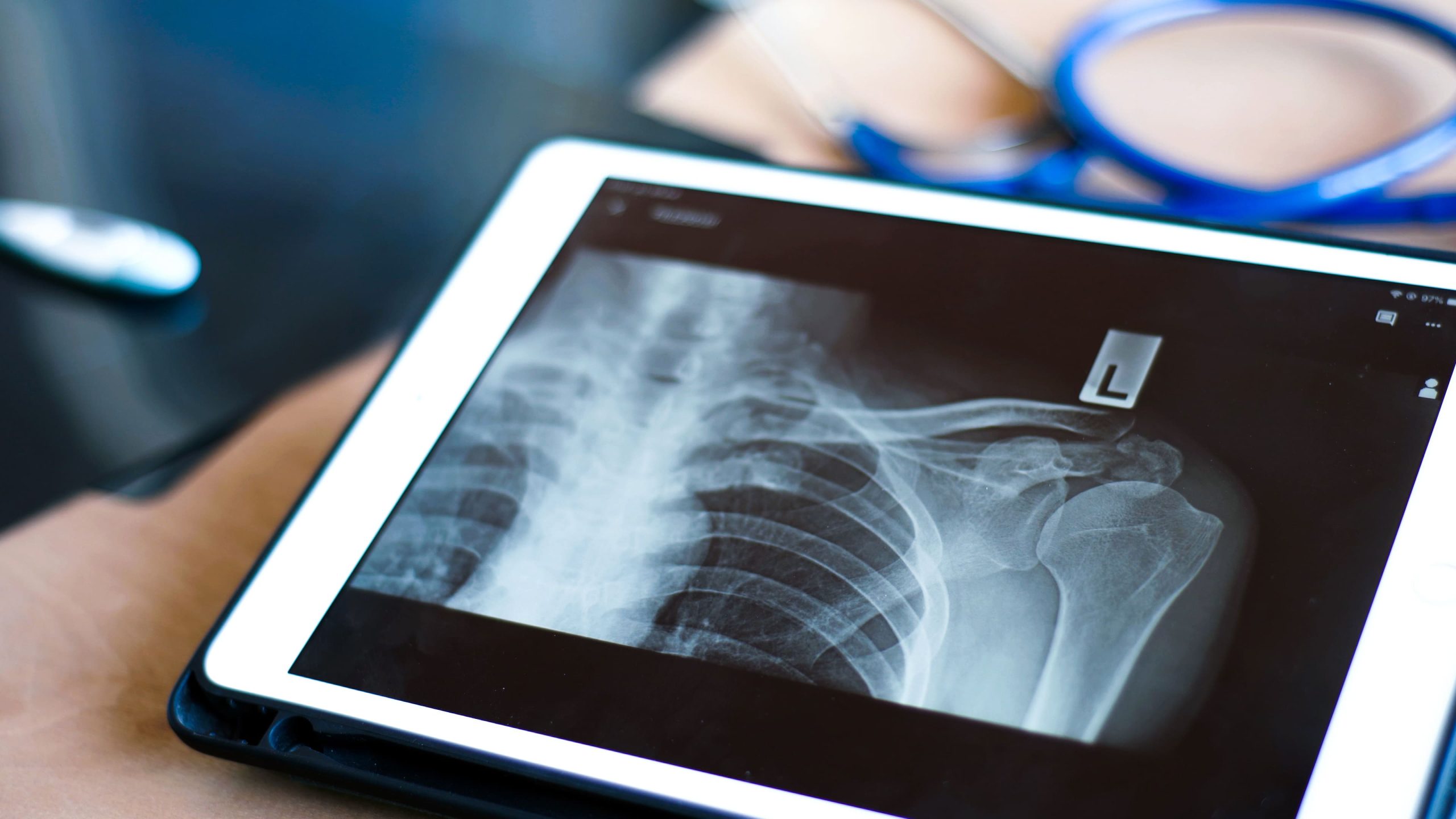
Reverse total shoulder replacement reverses the anatomy of the shoulder joint by placing a metal ball in the socket and a plastic socket on the arm bone. This biomechanical switch allows the deltoid muscle to take over arm movement when the rotator cuff is severely damaged or absent. By reversing the joint’s mechanics, this approach may help restore function for patients whose complex shoulder problems cannot be adequately addressed through standard replacement techniques.
How Reverse Shoulder Replacement Differs from Conventional Surgery
While conventional surgery replicates natural anatomy with a ball on the humerus, reverse replacement attaches a metal ball to the shoulder’s natural socket (the glenoid — the cup-shaped surface of the shoulder blade), and places a plastic cup on the arm bone instead.
Conditions That May Require Reverse Replacement
Rotator Cuff Tear Arthropathy
Untreated massive rotator cuff tears allow the arm bone to migrate upward and grind against the shoulder blade, causing a specific type of painful arthritis. Since the stabilising muscles are missing, a reverse replacement is typically needed to help maintain stability of the new joint.
Failed Previous Shoulder Surgery
Patients with previous shoulder replacements that have loosened or failed often require a “revision” to a reverse design to restore stability. This approach is also used when earlier rotator cuff repairs do not heal adequately and progress into chronic joint degeneration.
Complex Proximal Humerus Fractures
Severe fractures of the upper arm bone in older patients with poor bone quality are increasingly treated with reverse replacement, particularly when the rotator cuff tendons are also damaged and unlikely to heal. However, outcomes vary, and results for fracture cases tend to be less predictable than for other indications — your surgeon will weigh this carefully before recommending it.
Severe Inflammatory Arthritis
Conditions like rheumatoid arthritis can simultaneously destroy both the protective joint cartilage and the supporting rotator cuff tendons. In these complex cases, a reverse replacement is often considered the most appropriate option to help provide pain relief and restore functional movement.
Tumour Reconstruction
When bone tumours in the upper arm require the removal of significant amounts of bone and soft tissue, the shoulder’s natural mechanics are lost. Reverse replacement allows surgeons to reconstruct the joint and restore arm function even after major tissue resection.
The Surgical Procedure
Surgery typically takes two to three hours under general anaesthesia. It often includes a regional nerve block (medication injected near nerves to numb the area) for post-operative pain control. Patients are positioned in a beach chair (semi-seated) position.
Incision and Exposure
The surgeon makes an incision over the front of the shoulder, typically around 10–12 centimetres (about 4–5 inches) long, though this varies depending on the patient’s anatomy and the complexity of the procedure.
In the most common approach (called the deltopectoral approach), the surgeon works between the deltoid and chest muscles without cutting through the deltoid, preserving its strength. Some surgeons use an alternative approach that requires temporarily detaching part of the deltoid from the top of the shoulder, which is then repaired at closure.
Joint Preparation
The surgeon removes the arthritic humeral head. The glenoid is then prepared by removing the remaining cartilage and shaping the bone surface. The surgeon drills a central hole and positions the baseplate, securing it with multiple screws. Proper positioning is important. The glenosphere must sit flush against bone with adequate inferior tilt to prevent certain complications.
Humeral Component Placement
The surgeon prepares the upper arm bone by reaming the canal (widening the hollow centre of the bone) to accept the metal stem. Trial components test range of motion and stability before the surgeon cements or press-fits final implants into place. The plastic humeral socket snaps onto the stem.
Closure
The surgeon repairs the subscapularis when possible. In some cases, it is absent or irreparable. The surgeon closes the wound in layers with drainage tubes to prevent blood accumulation.
Recovery Timeline and Rehabilitation
Immediate Post-Operative Period
Hospital stay is typically 1 night for most patients, though complex cases or revision surgeries may require longer. Some procedures are now performed as day cases, allowing discharge the same day.
First Six Weeks
The sling remains on except during exercises and hygiene. Physical therapy focuses on passive motion. The therapist moves the arm while muscles remain relaxed. This protects the healing subscapularis repair and allows soft tissues to settle around the implant. Most patients can perform light activities with the opposite hand.
Six Weeks to Three Months
At around six weeks, the sling is gradually removed, and therapy shifts from passive movement (where the therapist moves the arm for you) to active movement (where you use your own shoulder muscles to lift the arm). Progress in range and resistance is introduced slowly over the following weeks.
Three to Six Months
Strengthening exercises intensify. Most daily activities become manageable. Overhead heavy lifting remains restricted. Functional improvement continues as muscles adapt to the reversed mechanics.
Beyond Six Months
Maximum recovery generally occurs by twelve to eighteen months. Many patients achieve the ability to lift the arm above shoulder height and perform daily activities with significantly reduced pain.
Expected Outcomes and Functional Gains
Reverse shoulder replacement primarily aims to eliminate chronic pain and restore the ability to perform essential daily tasks.
- Significant Pain Relief: Many patients experience a meaningful reduction in shoulder pain, which may lead to improved sleep quality and decreased reliance on pain medications.
- Improved Forward Elevation: Patients typically regain the ability to lift their arm forward and overhead, though rotational movements like reaching behind the back may remain limited.
- Functional Strength: While the deltoid muscle provides enough power for moderate lifting and daily activities, the shoulder will not reach the high-intensity strength or fine motor control of a healthy, natural joint.
Potential Complications
Instability and Dislocation
Dislocation is a recognised risk, most commonly linked to surgical technique, implant positioning, and patient-specific factors. The risk is generally higher in the early recovery period before the surrounding soft tissues have fully healed and adapted to the new joint mechanics.
Scapular Notching
The mechanical contact between the humeral component and the shoulder blade during arm movement can erode bone over time, creating a notch. Modern implant designs and surgical techniques, positioning the glenosphere lower, have reduced this occurrence. Mild notching often remains stable and causes no symptoms. However, more severe notching can contribute to glenoid baseplate instability and, in some cases, implant failure over time. Its significance depends on how extensive it becomes, which is why surgeons monitor it during follow-up imaging.
Infection
Deep infection requires aggressive treatment. This potentially includes implant removal, antibiotic spacer placement, and later revision surgery. Infection rates for primary reverse replacement remain low with proper surgical protocols.
Nerve Injury
Several nerves run close to the surgical field. The axillary nerve — which controls the deltoid muscle — and the suprascapular nerve are both at risk. Most cases of nerve irritation are temporary and recover over months, though permanent injury is possible.
Implant Loosening
Long-term wear and loosening of components, particularly the glenoid baseplate, may necessitate revision surgery years after the original procedure.
Comparing Reverse Replacement to Other Options
Conservative Management
Physical therapy, anti-inflammatory medications, and corticosteroid injections can temporarily manage symptoms. However, for patients with cuff tear arthropathy or other conditions suited for reverse replacement, non-surgical treatment typically provides diminishing returns.
Arthroscopic Procedures
Shoulder arthroscopy (minimally invasive surgery using a camera and small instruments inserted through tiny incisions) cannot address the combined problems of massive rotator cuff loss and arthritis that reverse replacement targets.
Shoulder Hemiarthroplasty
Replacing only the humeral head while preserving the natural glenoid suits certain conditions. However, it fails in cuff tear arthropathy for the same reason a conventional total replacement does, without a functioning rotator cuff to hold the ball centred in the socket, the metal head migrates upward and erodes surrounding bone, leading to pain and loss of function.
Conventional Total Shoulder Replacement
When the rotator cuff remains intact, conventional replacement may offer better rotation and longer implant survival in suitable cases. However, it fails predictably when the cuff is absent.
Preparing for Surgery
Medical Optimisation
Controlling diabetes, managing cardiac conditions, and optimising nutrition improve surgical outcomes. Stopping smoking at least four weeks before surgery has been shown to reduce the risk of surgical site infection. Longer periods of stopping — ideally 8–10 weeks or more — provide additional benefit by improving blood flow, immune function, and overall healing capacity. Your surgeon may ask you to stop as early as possible before your procedure.
Pre-Operative Assessment
Blood tests, chest X-ray, and electrocardiogram (a test that records the heart’s electrical activity) screen for underlying conditions. Shoulder CT scans provide detailed bone mapping for surgical planning. They reveal glenoid erosion patterns and bone stock available for implant fixation.
Practical Preparations
Arrange home modifications. Sleeping in a recliner chair is often more comfortable than lying flat initially. Prepare easy-to-wear clothing that opens in front. Stock simple meals and arrange help for the first few weeks.
When to Seek Professional Help
- Persistent shoulder pain unrelieved by rest, ice, or over-the-counter medications
- Inability to raise the arm above waist height
- Night pain that regularly disrupts sleep
- Grinding or catching sensations with shoulder movement
- Progressive weakness in lifting or reaching
- Previous shoulder surgery with worsening symptoms
- Shoulder pain following a fall or injury in the context of known arthritis
Commonly Asked Questions
How long do reverse shoulder replacement implants last?
Current data shows that most implants function well for 15 to 20 years. Younger, more active patients may have higher lifetime revision rates than older patients.
Can I return to sports after reverse shoulder replacement?
Many patients return to recreational activities such as golf, swimming, and cycling after full recovery, and these have the highest return-to-sport rates after reverse replacement. However, your surgeon will advise on technique modifications, particularly for swimming strokes and golf swings, which involve rotation and overhead movement that can stress the repair. Return is possible for most patients, but should be guided by your rehabilitation team.
Is reverse shoulder replacement performed as day surgery?
Hospital stays of 1–2 nights are now typical at most centres, with same-day discharge available for carefully selected, healthy patients. Complex revision cases or patients with significant medical conditions may require longer stays. Your surgeon will advise based on your individual circumstances.
What if I need shoulder replacement on both sides?
When both shoulders require replacement, surgeons stage the procedures rather than operating simultaneously. Evidence suggests waiting at least 3 months between sides to reduce complication risk — though many surgeons prefer around 6 months, so the first shoulder is functioning well enough to support daily life before the second operation begins.
Will I set off metal detectors at airports?
The implant may trigger security scanners. Carrying a card identifying your joint replacement can expedite security screening. Most airports routinely accommodate joint replacement patients.
Next Steps
Reverse total shoulder replacement reliably addresses pain in cases where rotator cuff loss and arthritis make conventional replacement unsuitable. Realistic expectations centre on pain relief and moderate functional gains—most patients regain the ability to lift the arm to shoulder height and resume daily activities, while rotation and heavy lifting remain limited. Implant selection, surgical technique, and pre-operative bone quality each directly influence outcomes and long-term implant survival.
If you are experiencing persistent shoulder pain with limited arm elevation, night pain disrupting sleep, or have been diagnosed with rotator cuff tear arthropathy, consult an orthopaedic surgeon to determine whether reverse shoulder replacement is appropriate for your condition.